
Combat athlete nutrition in the Caucasus
Traditional Caucasian cuisine is naturally adapted to combat athletes. Rich in protein, healthy fats and complex carbs, it provides the energy needed to sustain 2 training sessions per day for 1 to 3 weeks. This article explains concretely what you will eat at MKR camp, why, and how it aligns with modern sports nutrition best practices.
THE PRINCIPLE: THE CUISINE THAT FED THE CHAMPIONS
The best Dagestani fighters (Khabib Nurmagomedov, Islam Makhachev, Umar Nurmagomedov) never followed a sophisticated Western sports diet. They ate their grandmother's cuisine. And they dominated world MMA.
It is not a coincidence. Traditional Caucasian cuisine, shaped by centuries of mountain life and intense physical work, naturally offers what modern sports nutrition recommends: quality protein, healthy fats, complex carbs, varied vegetables, probiotic fermented dairy. To understand the cultural background, see the training method of Khabib Nurmagomedov.
WHAT YOU WILL EAT AT MKR CAMP
Here is a typical day with the dishes you will encounter most often.
Hearty breakfast (7.30 a.m.)
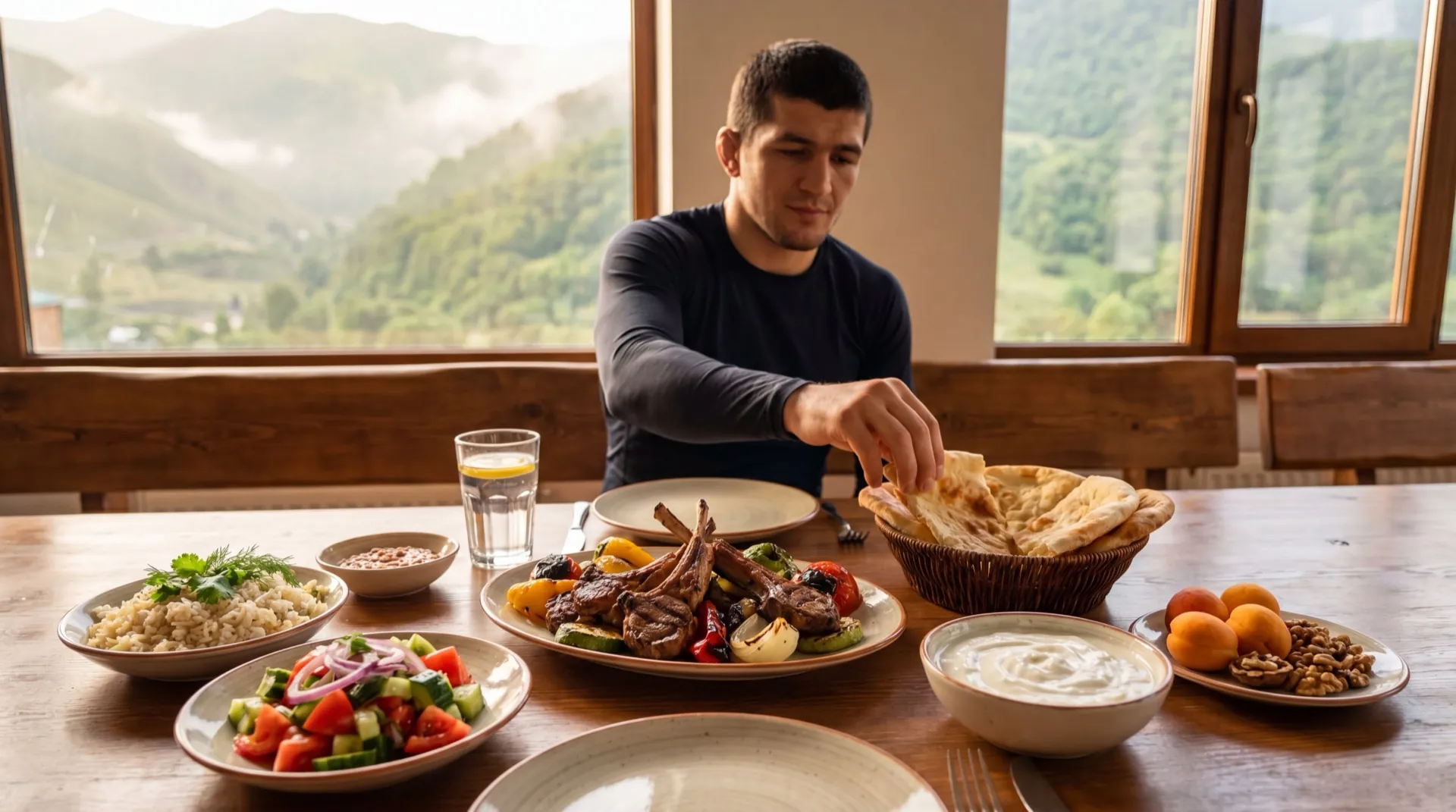
Scrambled eggs or herb omelet, meat grilled the day before (lamb or chicken), local cheeses (often a fresh goat cheese or a semi-hard cheese), fresh bread straight out of the oven, farm butter, mountain honey, dried fruit (apricots, dates, nuts), hot black tea. Estimated calories: 700 to 900 kcal depending on your weight.
Between-session snack (11 a.m.)
Depending on the intensity of the morning session: fresh fruit (apple, pear, pomegranate depending on the season), thick matsoni yogurt, nuts, sometimes a small portion of warm kasha (buckwheat or millet). Estimated calories: 200 to 350 kcal.
Full lunch (1 p.m.)
The main meal of the day. Stewed or grilled meat (lamb most often, sometimes beef or chicken), accompanied by kasha (local whole grains), cooked or raw vegetables, Caucasian salad (tomato, cucumber, herbs, onions), fresh bread, cheese. Soup as a starter depending on the season (kharcho, dovga). Yogurt for dessert. Estimated calories: 900 to 1,200 kcal.
Afternoon snack (4 p.m.)
Fruit, dried fruit, sometimes a savory snack depending on the planned intensity for the evening session. Hydration is a priority at this moment. Estimated calories: 200 to 300 kcal.
Light dinner (8 p.m., depending on the session)
Dinner is not systematically included in the MKR package but can be organized depending on the session. When it is, it is lighter: soup, vegetables, cheese, fruit, sometimes a moderate portion of meat. Dagestani culture favors an early and light dinner to preserve sleep.
THE NATURAL MACROS OF CAUCASIAN CUISINE
Without gram-by-gram calculation, here are the average ratios of a typical day at MKR camp:
- Protein: 30 to 35% of calories. Main sources: lamb, chicken, eggs, cheeses, ayran. Largely covers the 1.6 to 2.2 g per kg recommended for a combat athlete.
- Carbs: 30 to 35%. Main sources: buckwheat and millet kasha (low glycemic index), fresh bread (semi-whole), vegetables, fruit, honey.
- Fats: 30 to 35%. Main sources: farm butter, olive oil, animal fat in meats, nuts, cheeses.
Total daily calories: 2,800 to 3,500 kcal depending on your weight and intensity. For an athlete who wants to lose weight for a fight (cut), MKR can adapt portions with 7 days notice. See how to prepare your first camp for possible adjustments.
HYDRATION: THE OFTEN NEGLECTED PRIORITY
The average altitude (800 to 1,500 m), the continental climate (hot dry in summer, cold dry in winter) and the intensity of 2 sessions per day multiply your water needs.
- Summer (June to September): 5 to 6 liters per day, including 1 to 1.5 liters during each session with added electrolytes (salt + magnesium).
- Mid-season (April, May, October, November): 3 to 5 liters per day.
- Winter (December to March): 3 to 4 liters per day, but do not underestimate because dry air also dehydrates.
Bottled water provided in quantity, plus mountain spring water during Sunday excursions (Sulak canyon, Sarykum dune). Abundant hot black tea at every meal, as everywhere in the Caucasus. No alcohol at camp (strict Muslim context plus sports recovery incompatible).
INTOLERANCES AND SPECIAL DIETS
MKR can accommodate most diets with a minimum of 7 days notice. Here is what is manageable and what requires particular effort.
Halal and pork-free
Managed by default. The cuisine of Dagestan and Chechnya is natively halal. No dish contains pork.
Vegetarian
Manageable without difficulty. Caucasian cuisine offers many dishes based on vegetables, cheeses, eggs, legumes, grains. Notify MKR upon registration.
Strict vegan
More complex to coordinate in a rural context where dairy is omnipresent (matsoni, ayran, cheeses). Possible but requires an explicit brief before departure. Bring B12 supplements in your luggage.
Gluten-free / celiac
Limited. Fresh bread is central to local culture and many dishes include it. Buckwheat kasha is naturally gluten-free and substitutes well. If you are severely celiac, bring a few supplements in your luggage (gluten-free protein bars, biscuits).
Lactose intolerance
Ayran and matsoni (fermented milks) are better tolerated than fresh dairy thanks to their richness in probiotics. Most moderate intolerants handle them well.
TACTICAL FASTING: OPTIONAL BUT POSSIBLE
Khabib Nurmagomedov practiced full Ramadan during his UFC preparation camps. This practice (fasting from sunrise to sunset for 30 consecutive days) triggered a strong metabolic adaptation. See our full analysis in the training method of Khabib.
At MKR camp, fasting is not imposed or recommended. If you practice Ramadan during your camp period, MKR adapts meal times (suhur before dawn, iftar at sunset) and adjusts session intensity. If you test classic intermittent fasting (16/8 for example), it is compatible with the camp provided you frame the meal windows well.
TO GO FURTHER
To prepare your camp on the physical side (beyond nutrition), see how to prepare your first camp in the Caucasus. To understand the Dagestan and Chechnya ecosystem, see the Dagestan destination page and the Chechnya destination page.
To discuss a particular diet before registration (fight cut, multiple intolerances, vegan), contact the MKR team directly via WhatsApp +33 7 83 10 96 81 or book a call on the registration page.