
Dagestani wrestling: the complete guide
Wrestling in Dagestan is not just a sport. It is a cultural institution, an educational system, and the technical base that produced Khabib Nurmagomedov, Islam Makhachev, Khamzat Chimaev (of Chechen origin but partly trained in the same ecosystem) and more than 30 active UFC fighters. This guide explores the concrete methods, history, and philosophy of Dagestani wrestling to help you understand what you will find at MKR camp.
THE HISTORY: A THOUSAND-YEAR-OLD ART
Wrestling in Dagestan has been documented since at least the 10th century, mentioned in Persian and Byzantine chronicles. Each village of the North Caucasus had its own combat tradition, its emblematic wrestlers, and its seasonal tournaments. The best wrestler in the village was respected for life, sometimes exempted from certain community obligations, and chosen to defend the honor of his group during inter-village competitions.
The arrival of Soviet power in the 20th century did not kill the tradition. On the contrary, the USSR structured the practice around Olympic competitions. The Dagestanis quickly became the best wrestlers in the USSR, and after 1991 the best Russian wrestlers in practically every weight category.
THE 5 SIGNATURE TECHNIQUES
Dagestani wrestling favors 5 technical families that you will find at every level of MKR camp.
1. Single-leg takedown
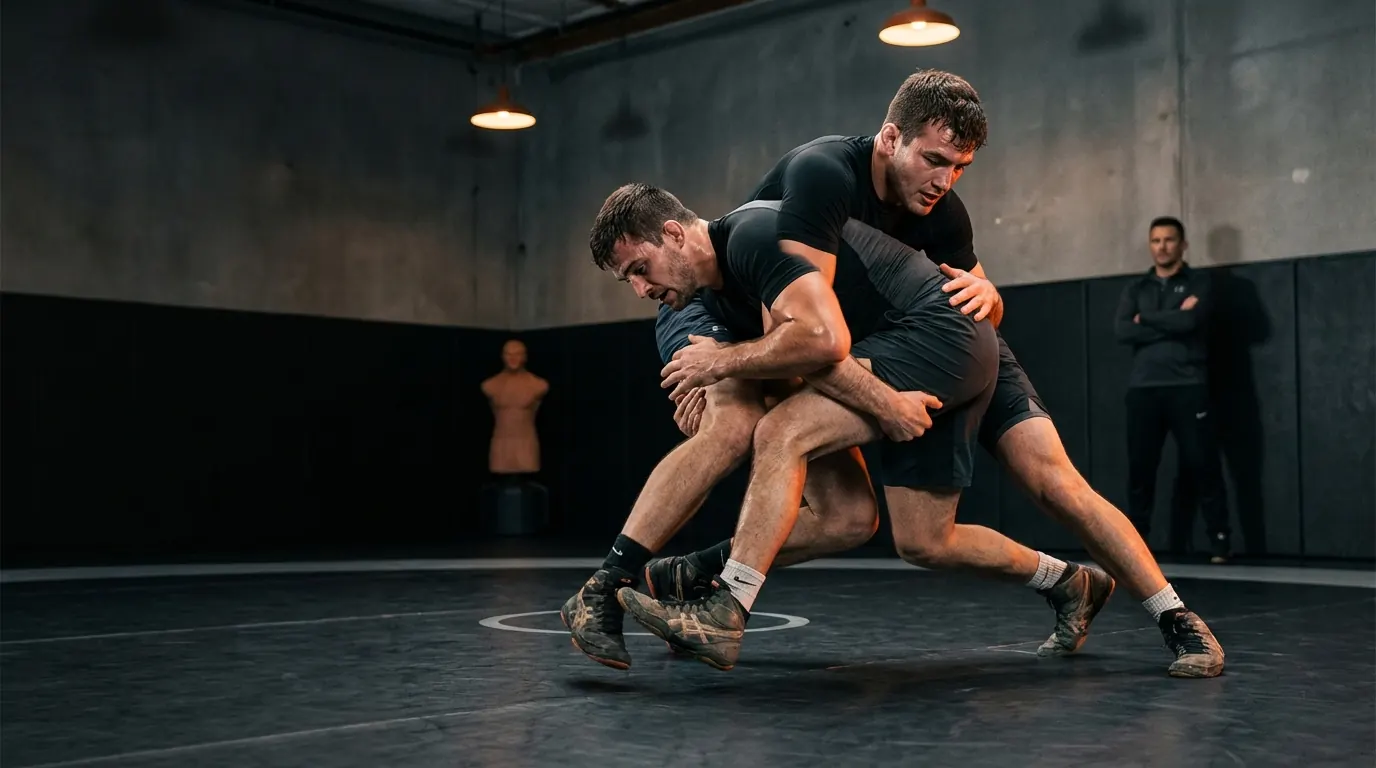
The attack on a single leg, with a clean grip on the opponent's shin or ankle. It is the most executed and the most profitable technique. Dagestanis teach it from age 6 with hundreds of repetitions per session.
2. Double-leg with low finish
The attack on both legs, with a very low descent (shoulders against the opponent's knees) and a finish by lift or lateral tilt. Riskier than the single-leg, but devastating against a tired opponent.
3. Chain wrestling
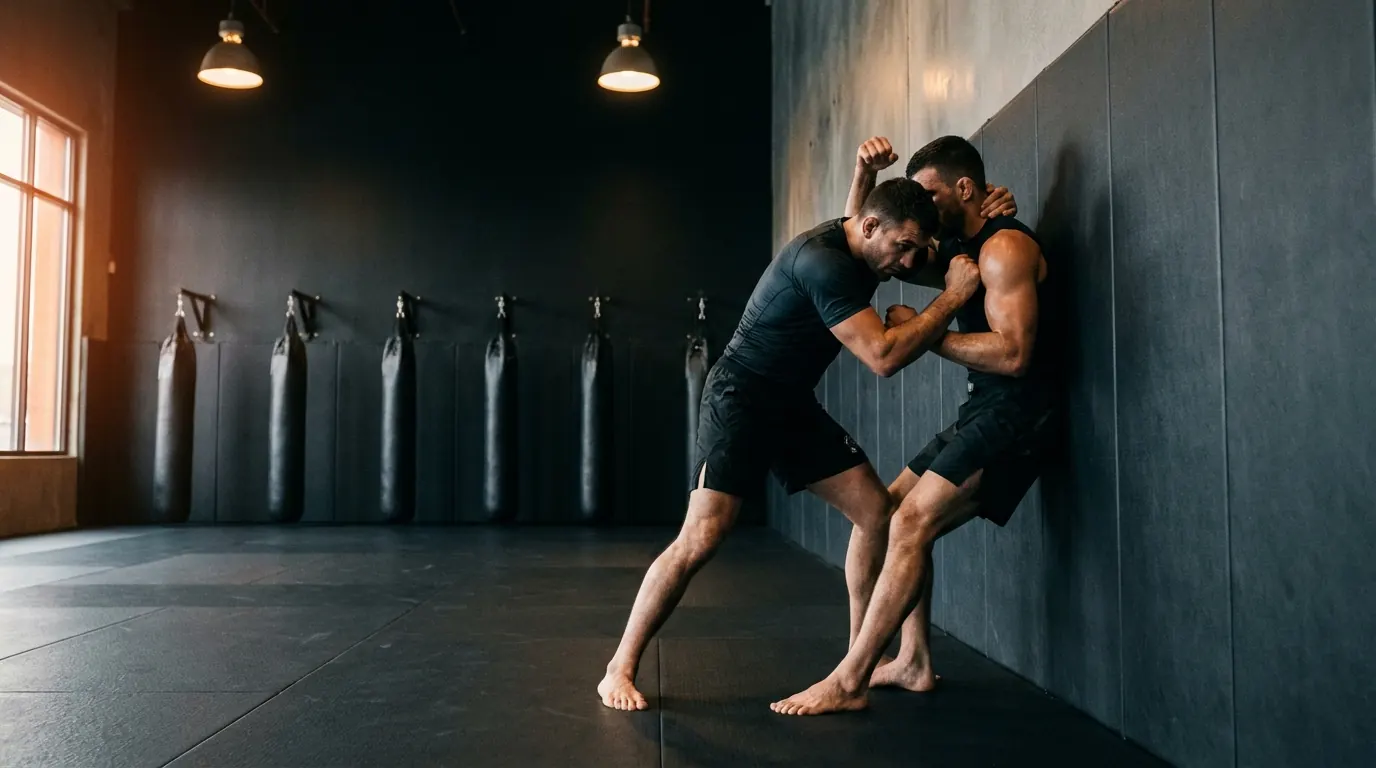
The art of chaining attacks continuously without a technical pause. If the single-leg does not pass, you immediately chain into a double-leg, then a back tilt, then a wrist control. The opponent can never reset.
4. Ground leg rides
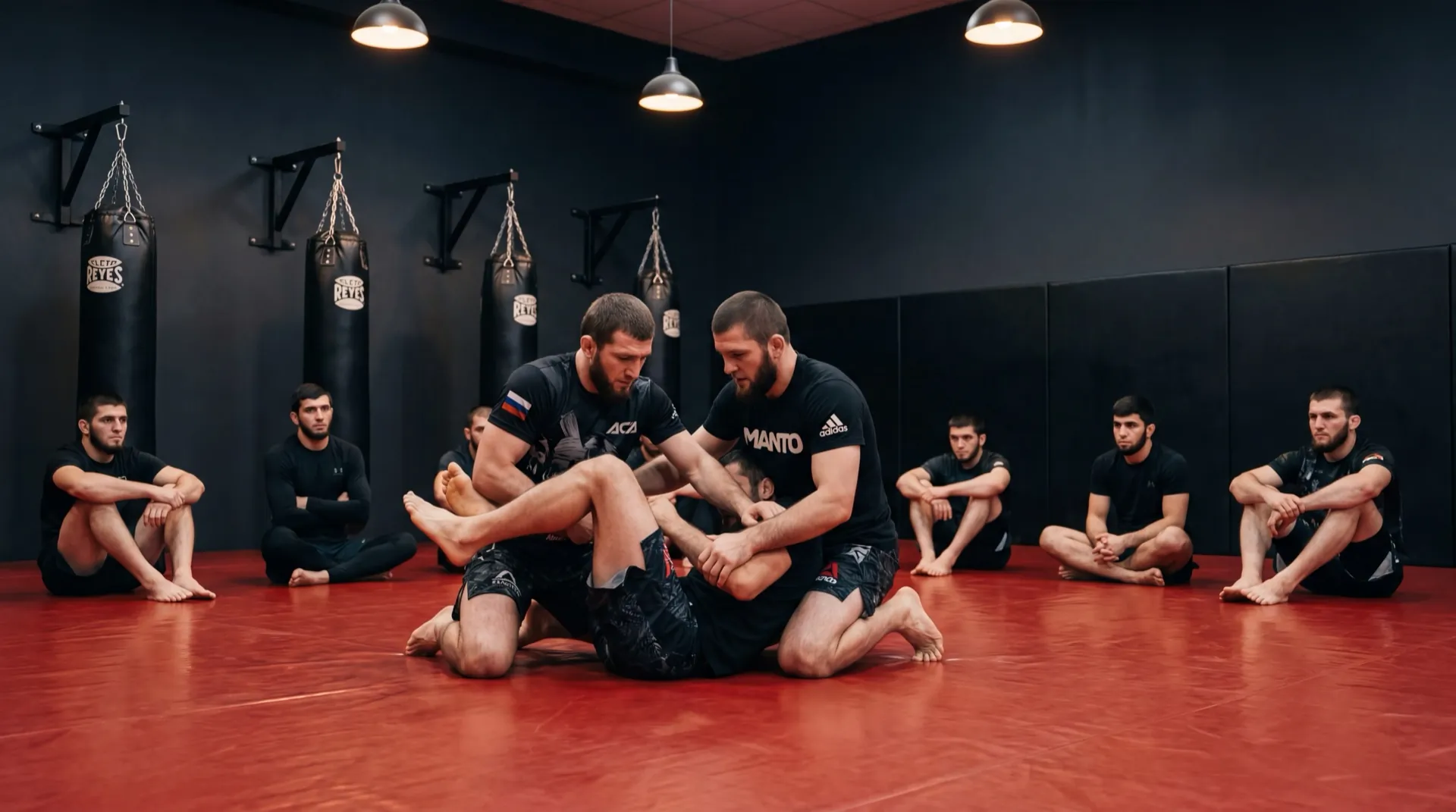
The leg controls on the ground to maintain prolonged dominance. This technique allows you to keep the opponent on the ground without spending energy, and to transition to submissions (in grappling) or to ground-and-pound (in MMA).
5. Continuous mat returns
The mat return is the technique to put the opponent back on the ground immediately when he stands up. The Dagestanis chain it in a loop: takedown, opponent stands up, immediate mat return, opponent stands up, immediate mat return. Mentally exhausting for the opponent in less than 2 minutes.
THE PROGRESSIVE PEDAGOGY
Learning follows a remarkably consistent structure from one village to another, transmitted orally for generations.
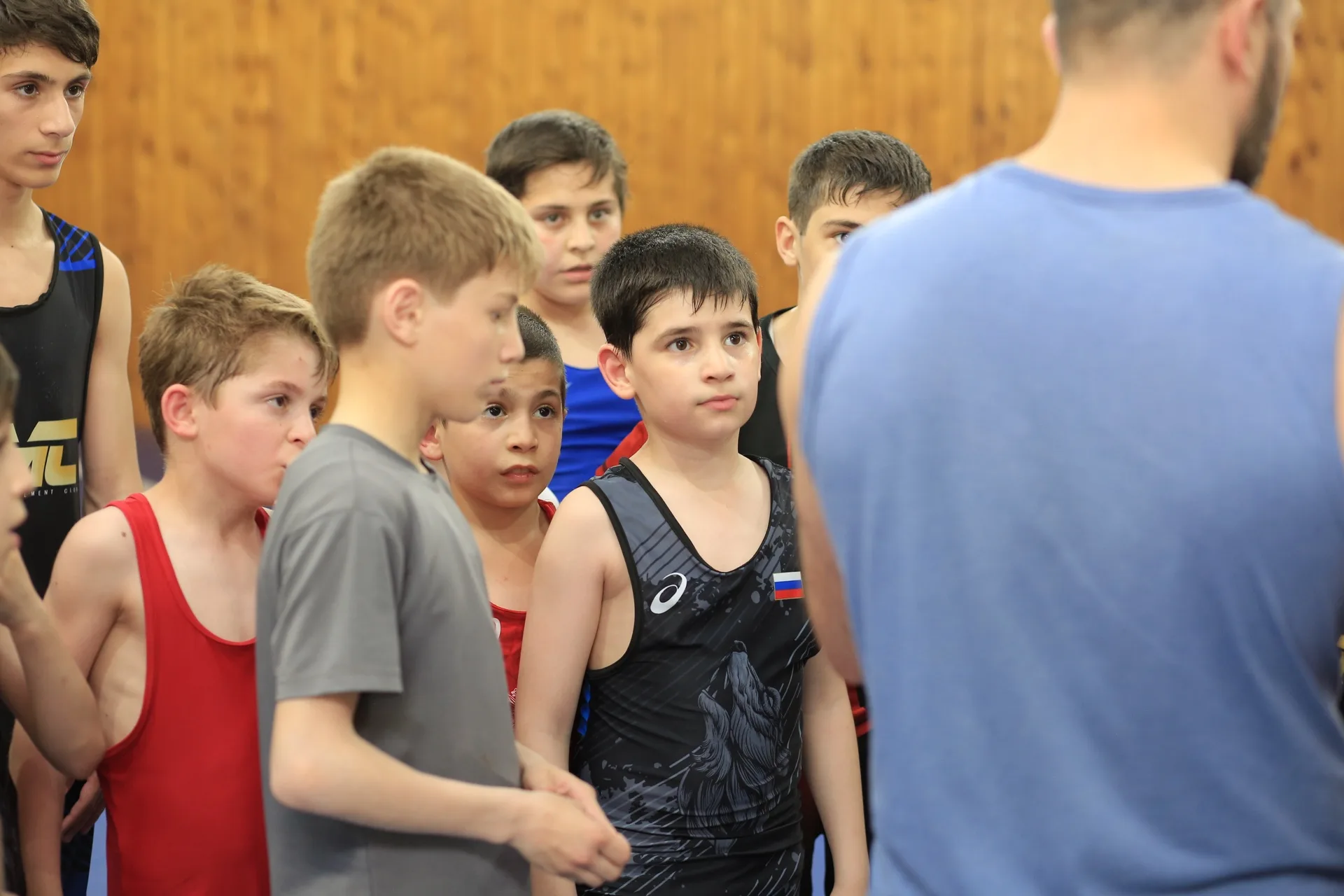
- 5 to 8 years: falls, displacements, first controls. No formal competition. Lots of play and mimicry with older partners.
- 8 to 12 years: first structured techniques (single-leg, double-leg, controls). Seasonal inter-village competitions. Controlled sparring supervised by elders.
- 12 to 15 years: integration into Russian federal structures. Regional championships. First structured weight cuts.
- 15 to 18 years: national youth championships. Natural selection: those who do not rise into the regional top 5 change paths.
- 18 years and beyond: senior career. Olympics for a few, MMA transition for many, return to local coaching for the majority.
This progression represents around 5,000 hours of mat-time at age 18 for a serious wrestler. To understand the impact of this accumulation on the world level, see our article why Dagestan dominates world MMA.
THE TRANSITION TO MMA
The genius move of modern Dagestan was transforming its excellence in freestyle wrestling into MMA domination. This transition is not automatic: every country produces wrestlers, few produce UFC champions.
Three factors explain the success of the Dagestani transition:
- Technical compatibility: chain wrestling and prolonged ground control adapt perfectly to MMA rules and UFC cage wrestling.
- Structured system: Eagle MMA (created by Abdulmanap Nurmagomedov) industrialized the conversion of wrestler to MMA fighter, adding stand-up striking, ground submissions, and cage work.
- Competition mindset: social pressure and natural selection apply equally to wrestling or MMA. No motivation ceiling, unlike contexts where sport remains a hobby.
For the method practiced by Khabib specifically, see the training method of Khabib Nurmagomedov.
THE PHILOSOPHY: WRESTLING AS LANGUAGE
In Dagestan, wrestling is not what you do. It is who you are. A Dagestani who does not wrestle is an incomplete Dagestani. This social pressure is uncomfortable to formulate in the West, but it explains 80% of the sporting result.
Wrestling is integrated into daily life. No opposition between work time and training time. No opposition between family and sport (brothers, cousins, uncles are often training partners). No opposition between religion and body: structured Muslim practice and intensive sport amplify each other.
WHAT YOU FIND AT MKR CAMP
At MKR Wrestling camp in Dagestan (official sessions or Custom or Family format), you will have access to:
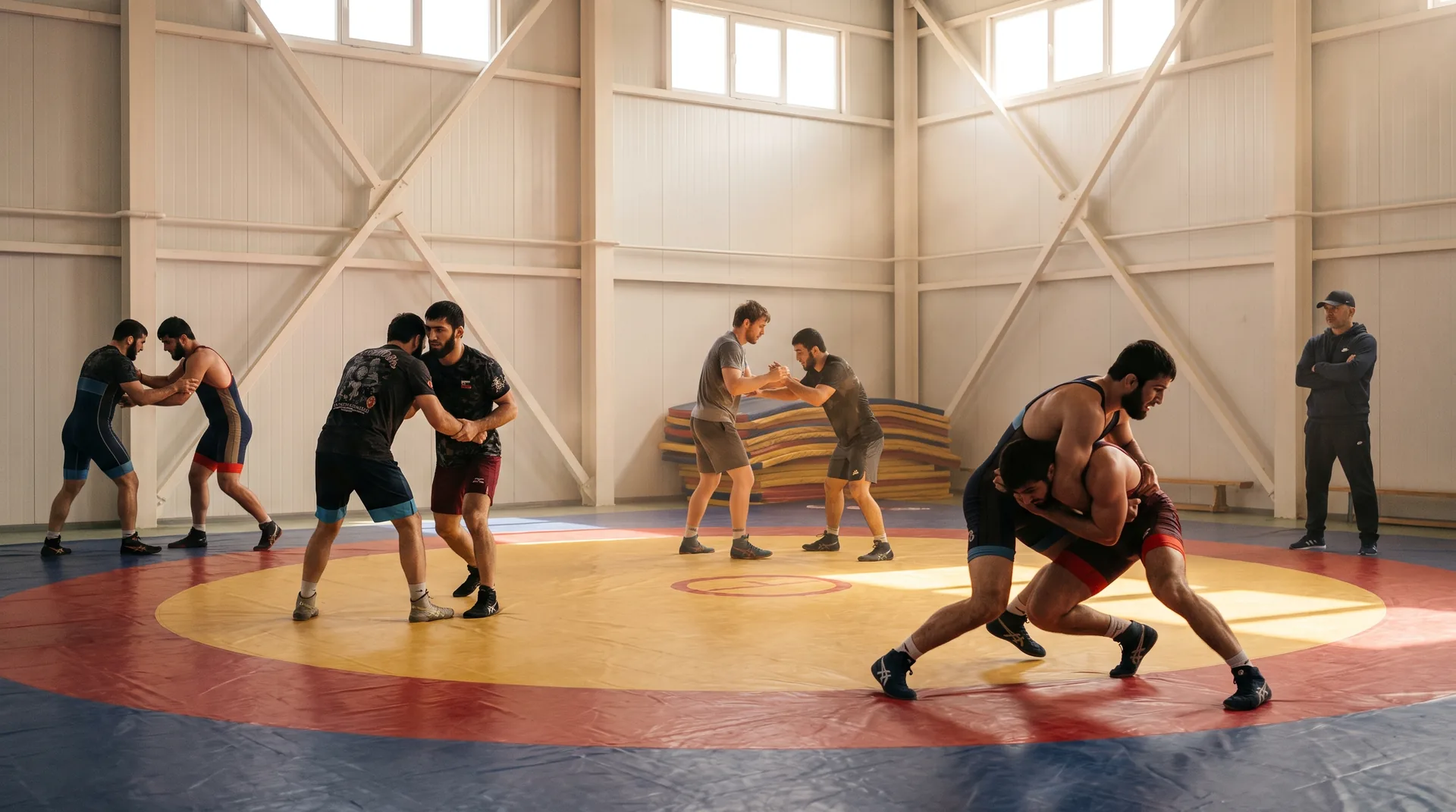
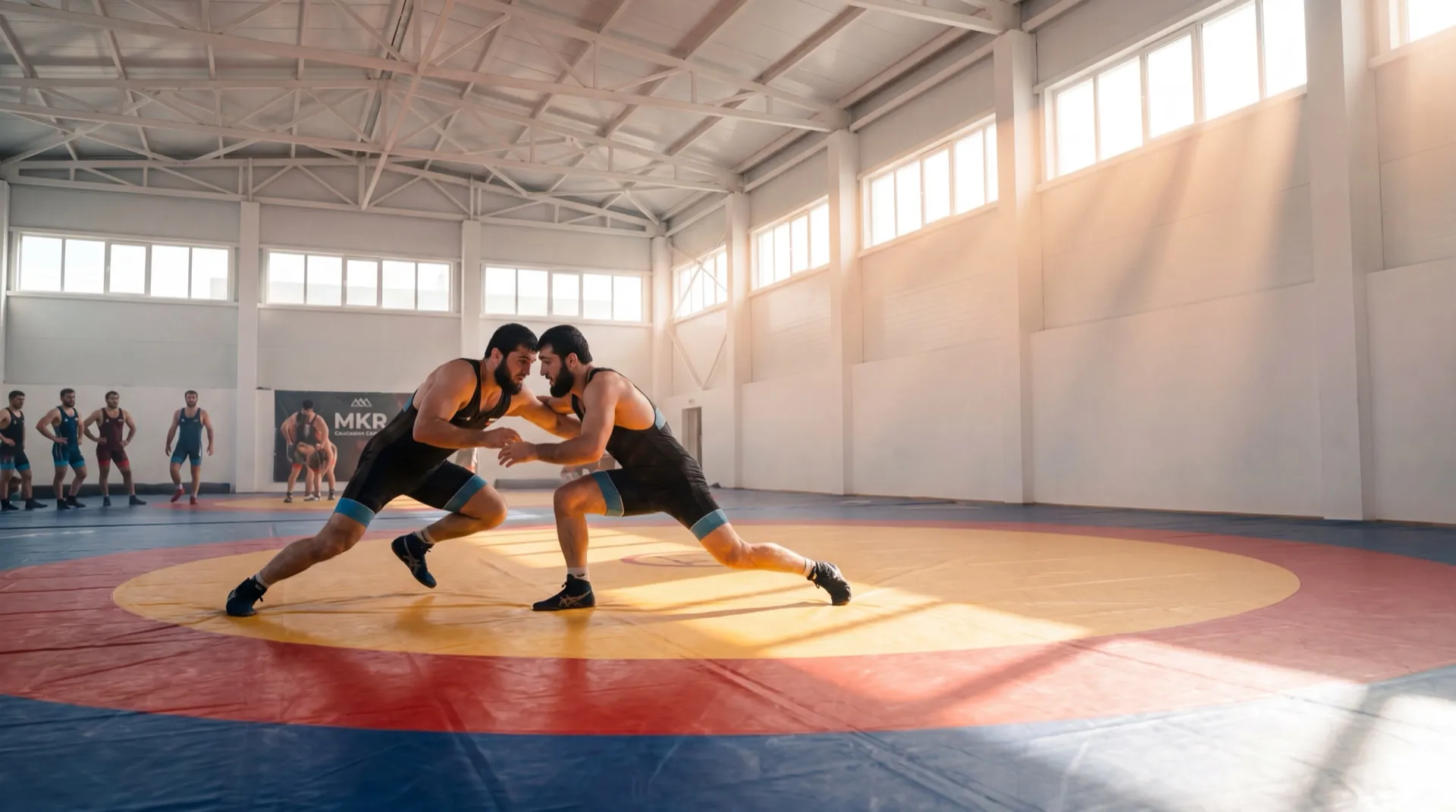
- Daily technical sessions in the partner gyms of Makhachkala and Kaspiysk, covering the 5 signature technique families.
- Supervised sparring with local wrestlers at regional level, sometimes national depending on the session.
- Personalized corrections: Dagestani coaches are known for their ability to correct in a few seconds what you have been doing wrong for years.
- Youth sessions for ages 8-17 in parallel for families registered in the Family camp, with a dedicated youth coach.
The official program only covers freestyle wrestling (no-gi, no Greco-Roman, no BJJ). See our Adult Wrestling program page for camp details and our youth wrestling page for the youth format.
To discuss your application or ask a precise technical question before registration, contact Ruslan directly via WhatsApp +33 7 83 10 96 81.