
Why Dagestan dominates world MMA
Dagestan, a small republic of the Russian Caucasus with 3 million inhabitants, produced more active UFC champions in the early 2020s than any other region in the world relative to its population. Khabib Nurmagomedov, Islam Makhachev, Umar Nurmagomedov, plus about twenty contenders and top contenders in world freestyle wrestling and MMA. It is not a coincidence, and it is not a mystery either.
This article breaks down the 3 pillars that make Dagestani domination, what is replicable at home, and what an MKR camp can concretely bring you in 1 to 3 weeks.
PILLAR 1: A THOUSAND-YEAR WRESTLING CULTURE
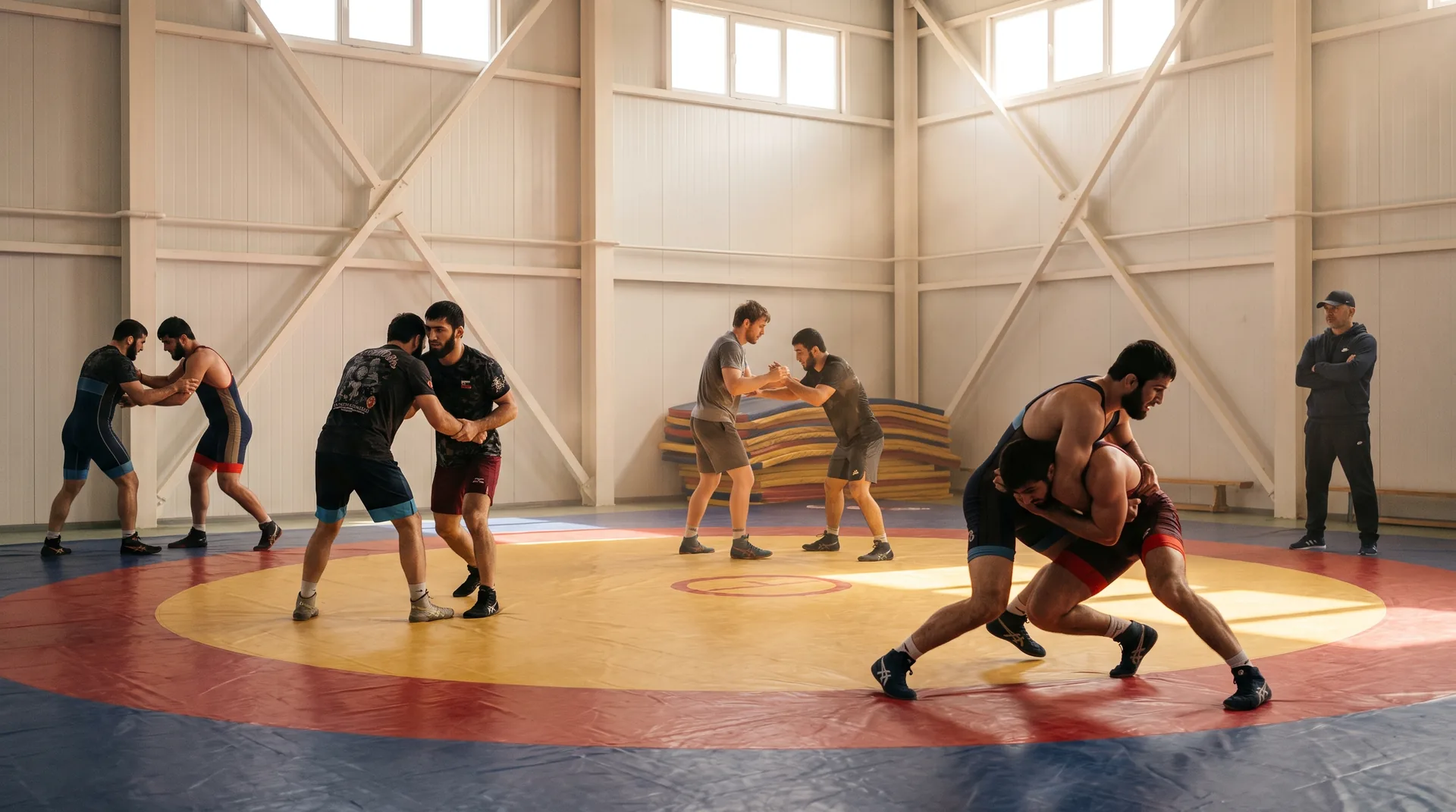
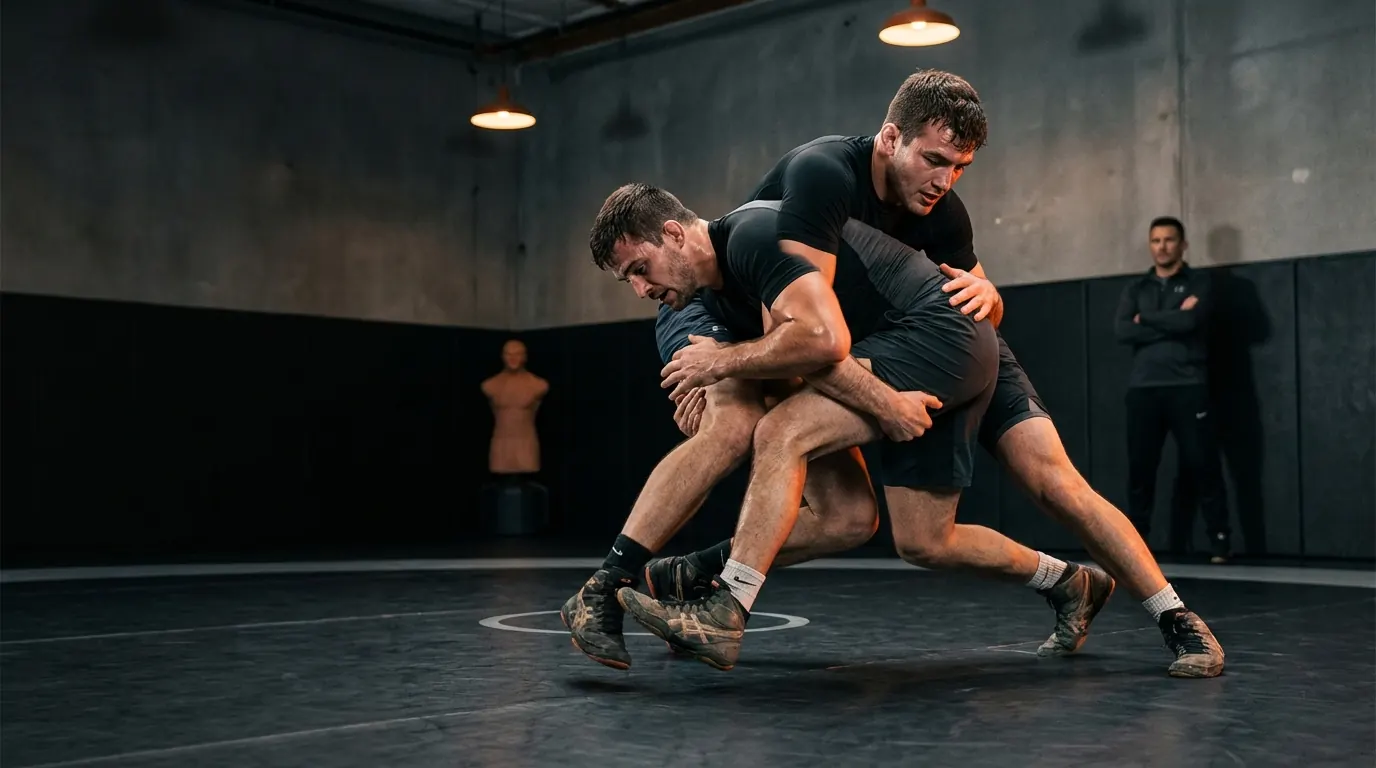
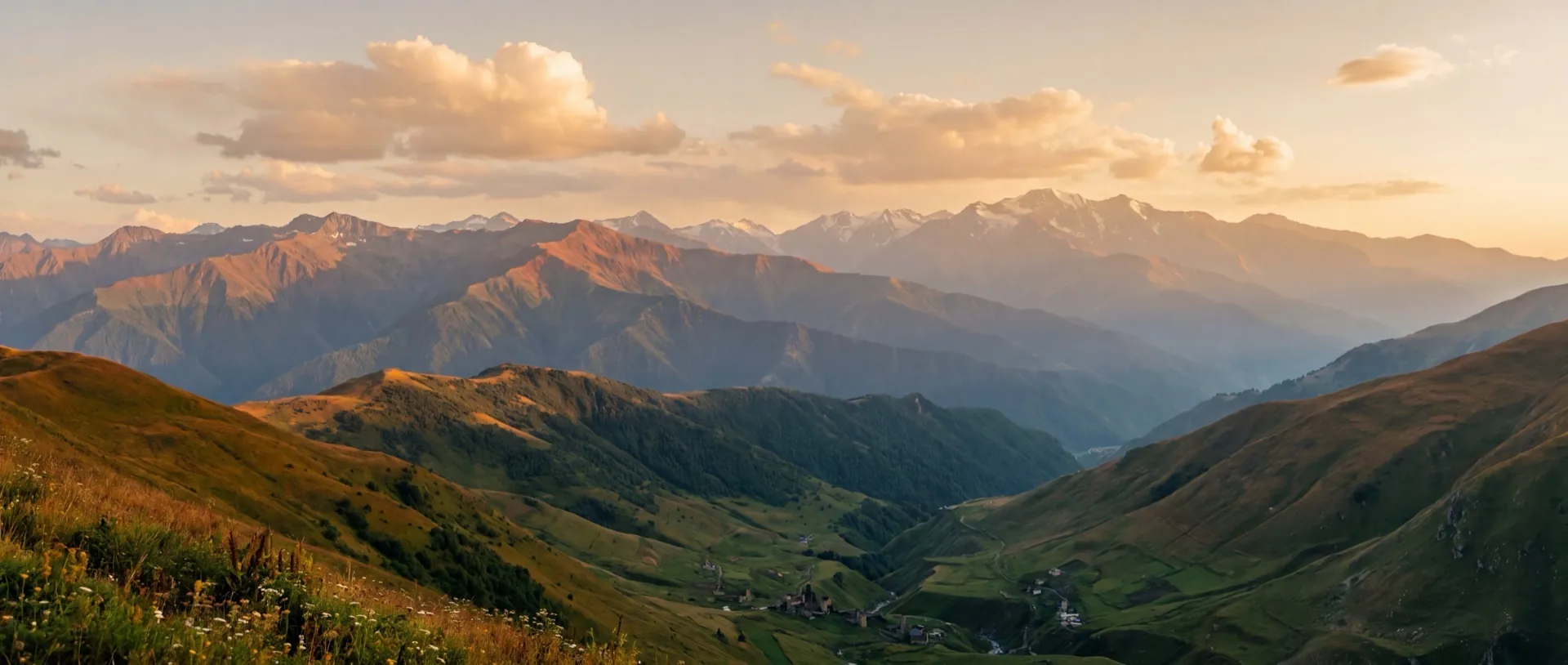
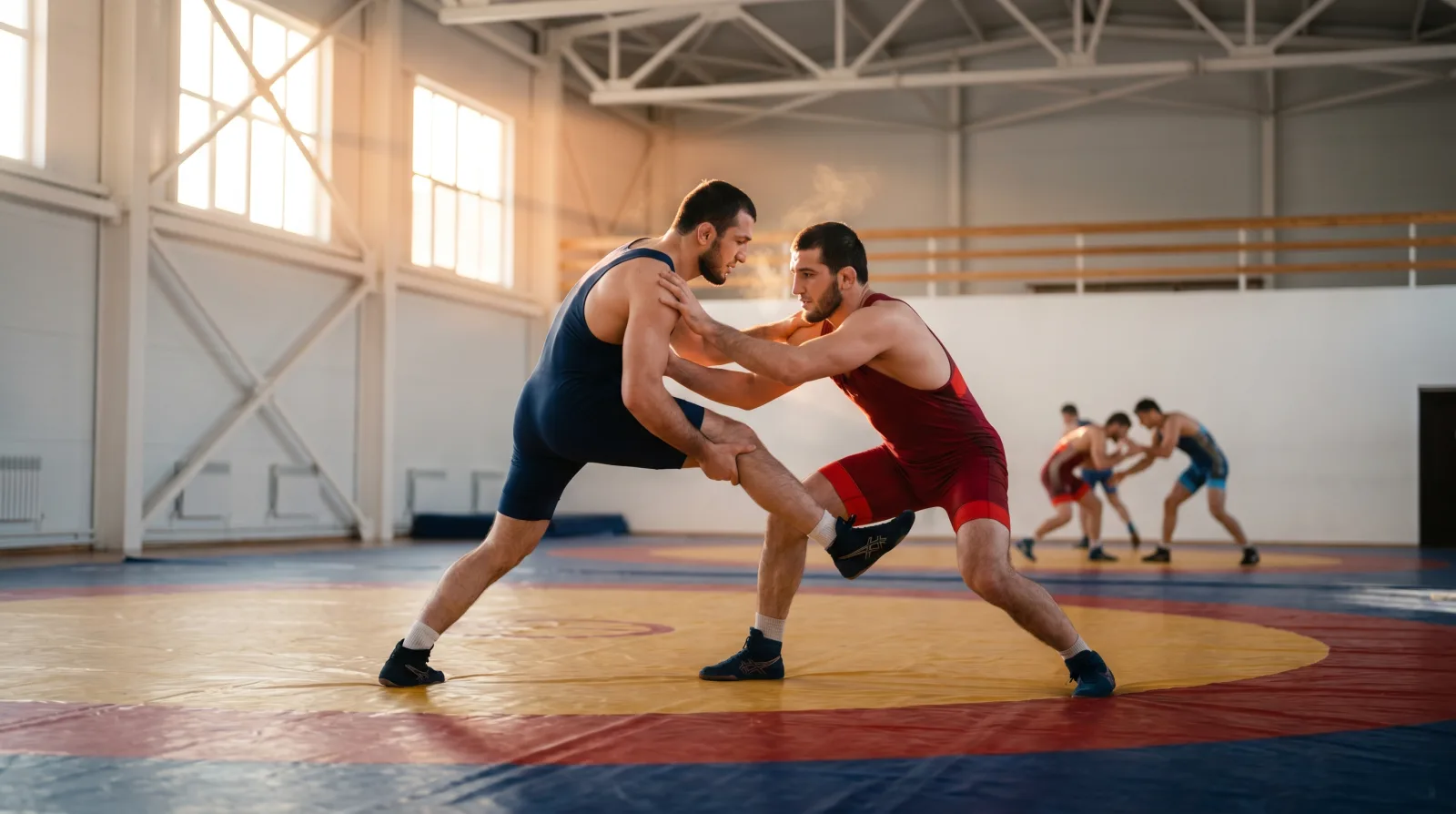
In Dagestan, wrestling is not a sport in the Western sense. It is a total social fact. In mountain villages, each community has its emblematic wrestler. Inter-village tournaments, organized at every major celebration, are major events that mobilize the entire region. A good wrestler is respected for life. A bad wrestler keeps a reputation to carry.
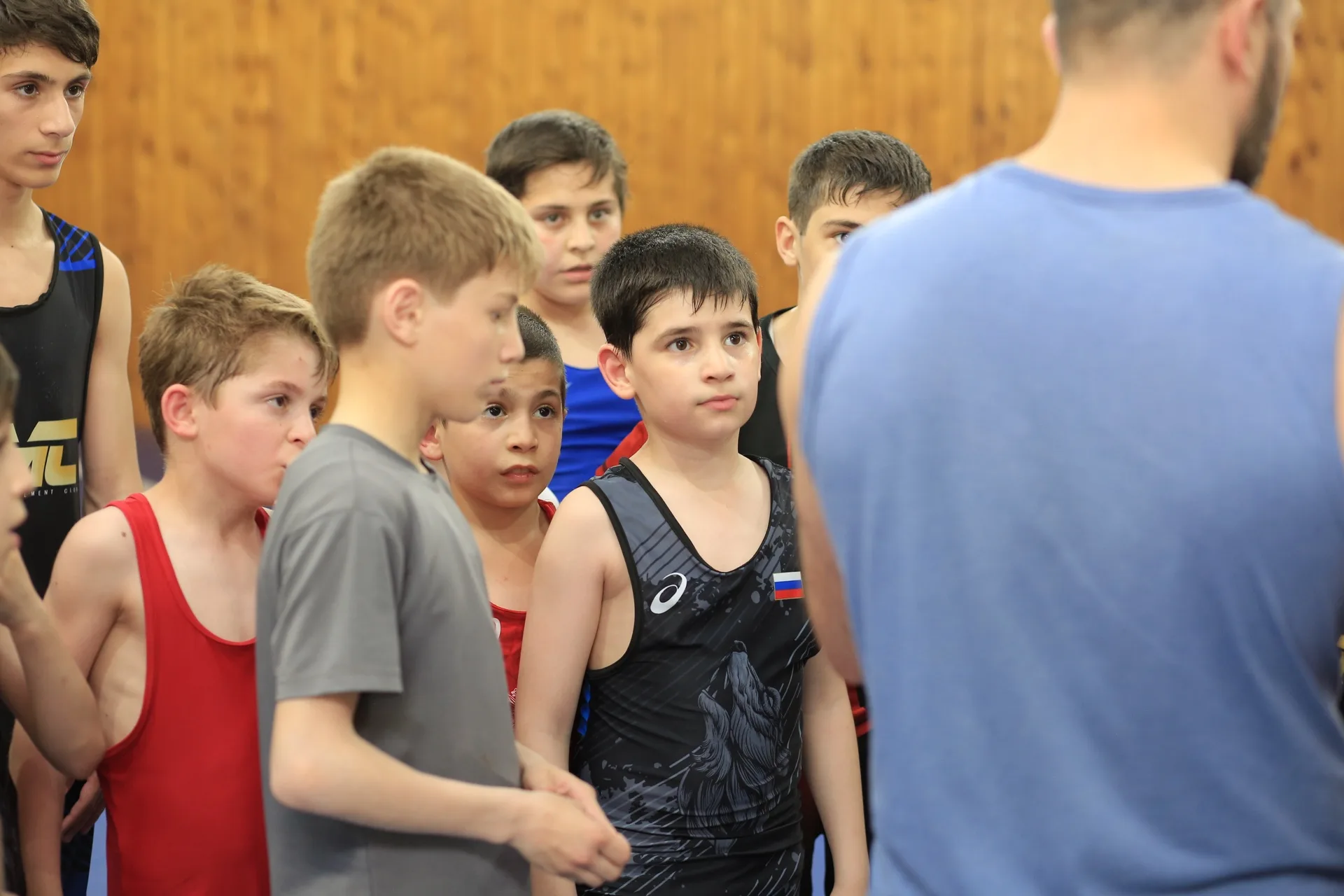
Concretely, boys start wrestling at 5 or 6 years old, often introduced by an uncle or father who wrestled themselves. By age 12, a promising wrestler has already accumulated the equivalent of 1,500 hours of mat-time. By age 18, he has 5,000. By age 22, he has faced more different partners than the majority of adult Western UFC fighters.
The difference between an average Western athlete and an average Dagestani athlete is not measured in strength, explosiveness or tactical IQ. It is measured in cumulative hours of controlled combat against serious partners. It is a mat-time debt that no 6-month intensive camp can fully fill.
This accumulation creates automatisms that you cannot get from isolated drills. The tilts, the wrist controls, the ground transitions become neurological reflexes, not learned techniques. It is the difference between "knowing how to do a technique" and "not being able to do otherwise".
PILLAR 2: THE EAGLE MMA SYSTEM
The genius move of modern Dagestan was successfully transitioning from freestyle wrestling to MMA. This transition was not spontaneous. It was thought through and industrialized by Abdulmanap Nurmagomedov, Khabib's father, starting in the 2000s.
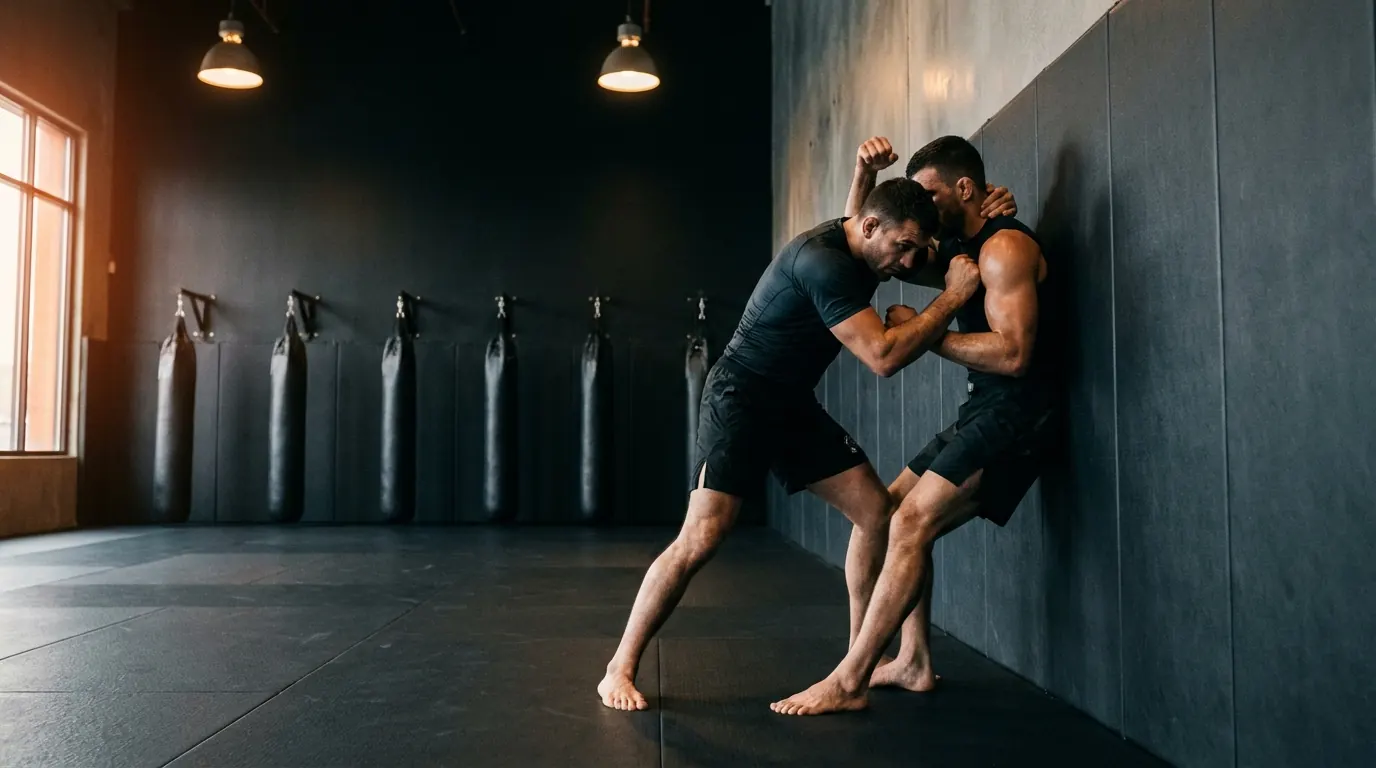
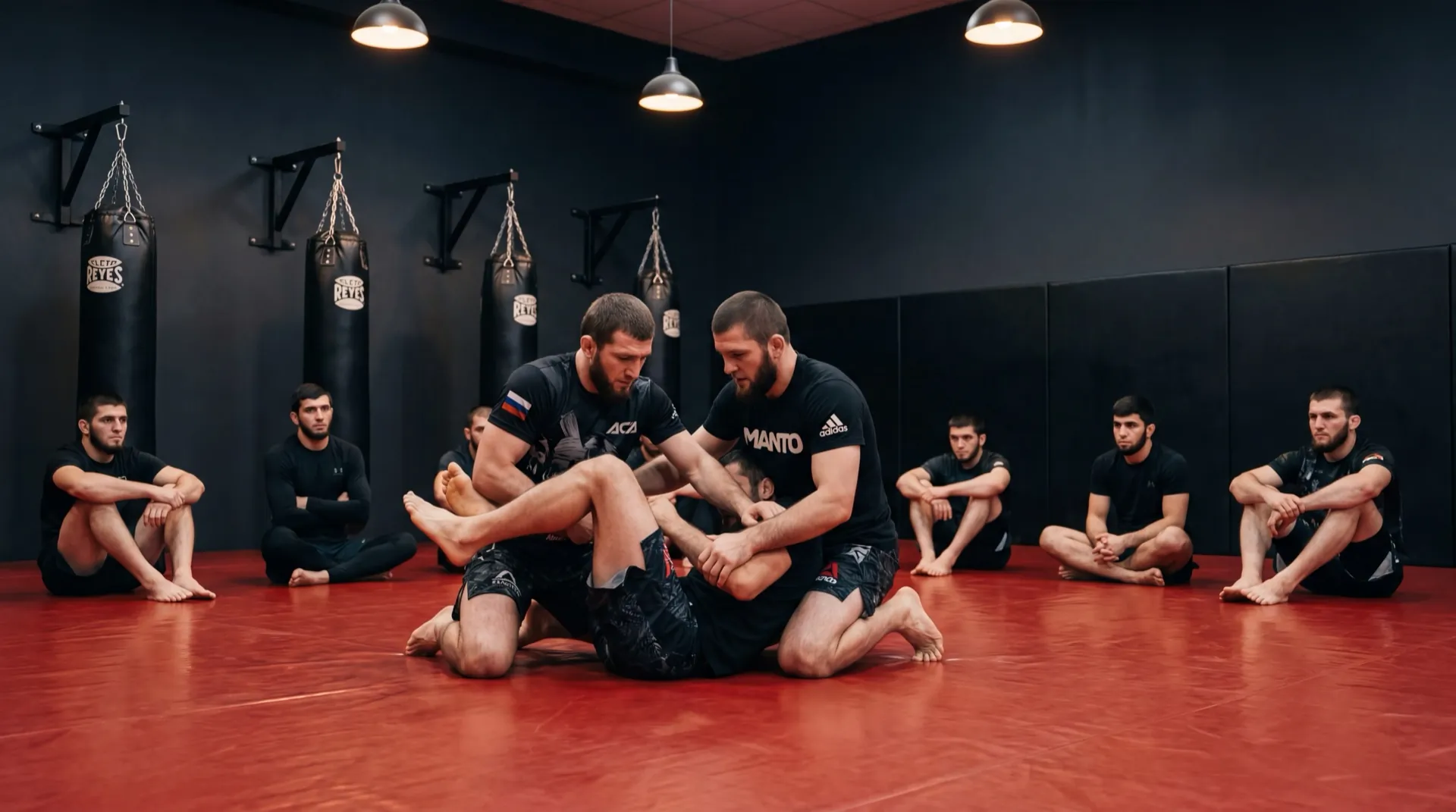
Abdulmanap created Eagle MMA, a structured system that takes already excellent wrestlers and adds the missing skills: stand-up striking, ground submissions, cage work. Eagle MMA affiliated gyms all operate according to the same scheme:
- 2 technical sessions per day, 6 days per week, 11 months per year. No long off-season.
- Sparring 4 days per week including 2 intense sessions simulating a fight.
- Systematic technical debrief after each session, video supported since 2015.
- Monthly competition at local, regional or international level depending on level.
- Selection by peers: the best sparring partners are disputed, the worst isolate themselves or give up.
The result: an Eagle MMA fighter arrives in UFC with 100+ intense sparring fights already behind him, where an average American fighter has 40 to 60. At equal technical level, the Dagestani fighter has a neurological combat experience 2x superior.
PILLAR 3: PERMANENT NATURAL SELECTION
This is the pillar people talk about least, because it is uncomfortable to formulate. In Dagestan, you fight to exist. Not to earn your living, to exist socially.
The son of a fighter who does not wrestle is frowned upon. The average fighter who does not progress is isolated. The fighter who abandons his training loses his place in the group. This social pressure, totally absent from the modern European or American context, creates a daily natural selection mechanism.
The 1,000 promising wrestlers of a village at age 15 become 100 at age 20, 10 at age 25, 1 at age 30. That 1 is statistically comparable to the best fighters in the world. In the United States, out of 1,000 promising wrestlers at age 15, the vast majority abandons upon arriving at university for economic reasons (college wrestling does not pay) or by diversification (other sport, other career).
WHAT IS NOT REPLICABLE: AND WHAT IS
Let's be honest about what a 1 to 3 week camp in Dagestan can and cannot do.
What is not replicable
- The 15 years of mat-time accumulated since childhood by a local wrestler.
- The village social pressure that pushes you to never stop.
- The tacit learning transmitted by elders outside formal structures.
What is fully replicable: including for you
- The intensity of controlled sparring: on site, in 2 weeks, you will experience more rounds of serious sparring than in 6 months of average European gym.
- The precise technical corrections by coaches who have seen and corrected thousands of versions of each gesture. See our article Dagestani wrestling: the complete guide.
- The mental reset: your standard of "what is hard" lastingly recalibrates after 2 weeks at camp.
- The contact with the ecosystem: you see how pros live, eat, sleep, train. You can import 30 to 50% of these habits at home.
WHY IT IS NOT JUST MMA
Dagestan also dominates Olympic freestyle wrestling (several Olympic medalists per generation), sambo, Russian free combat and several other grappling disciplines. MMA is just the most mediatized showcase.
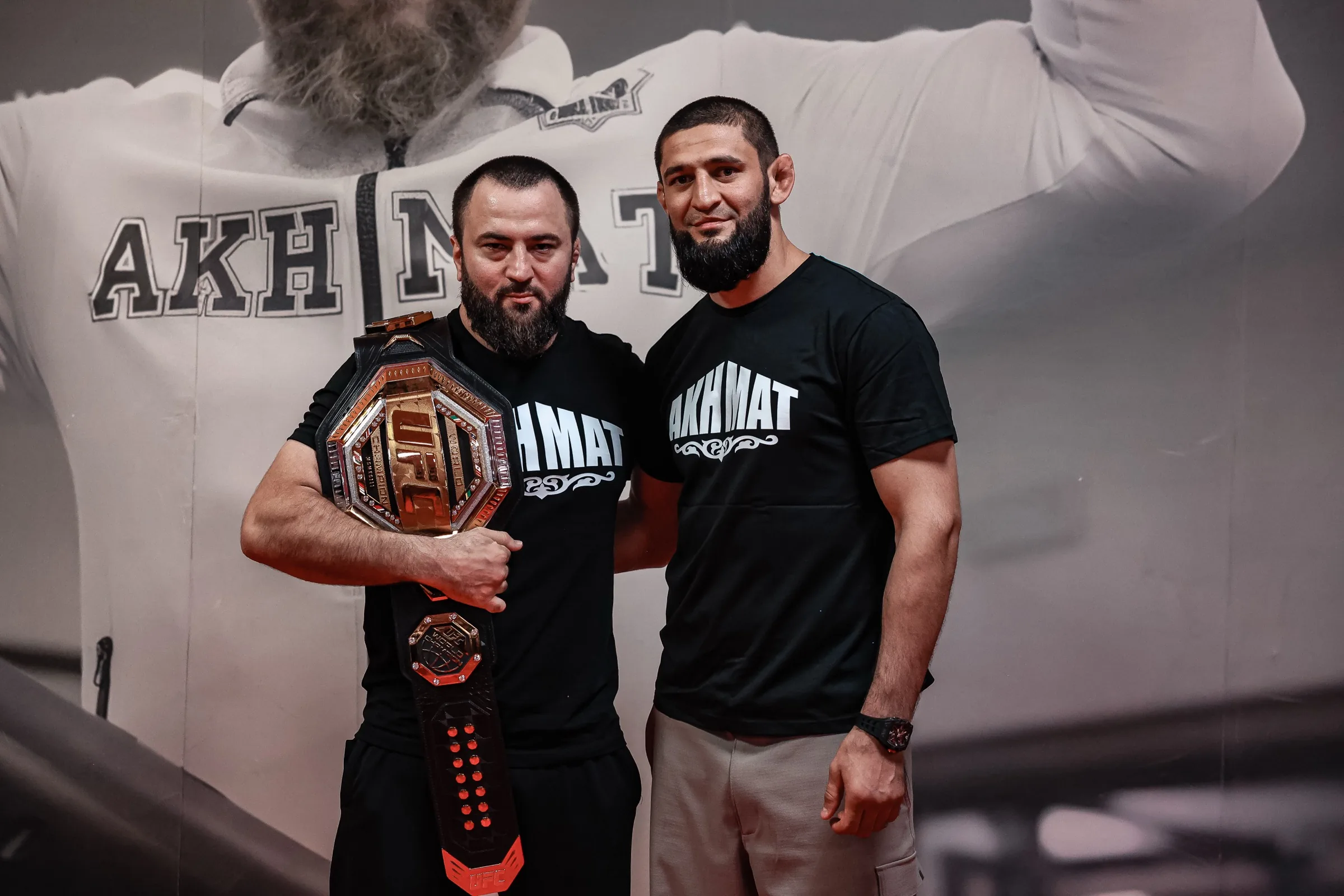
That is why MKR organizes separately a Wrestling camp in Dagestan (Makhachkala, Kaspiysk) and an MMA camp in Chechnya (Grozny, Akhmat Fight Club). See the destinations page to understand how each ecosystem works in its own right. MMA in Chechnya requires a minimum Advanced level, wrestling in Dagestan is open from 1 year of practice with a ground base and the necessary physical condition.
RUSLAN'S TAKE, MKR FOUNDER
Ruslan Mukhtarov, founder of MKR Caucasian Camp, former French wrestling team (INSEP 2012-2016): "People often come to Dagestan thinking they will copy Khabib. That is not the angle. The angle is to understand that Khabib is not exceptional because he is Khabib. He is exceptional because he came out of a system that produces Khabibs in series. What you are coming to find is the system, not an individual."
WHAT MKR BRINGS YOU IN 1 TO 3 WEEKS
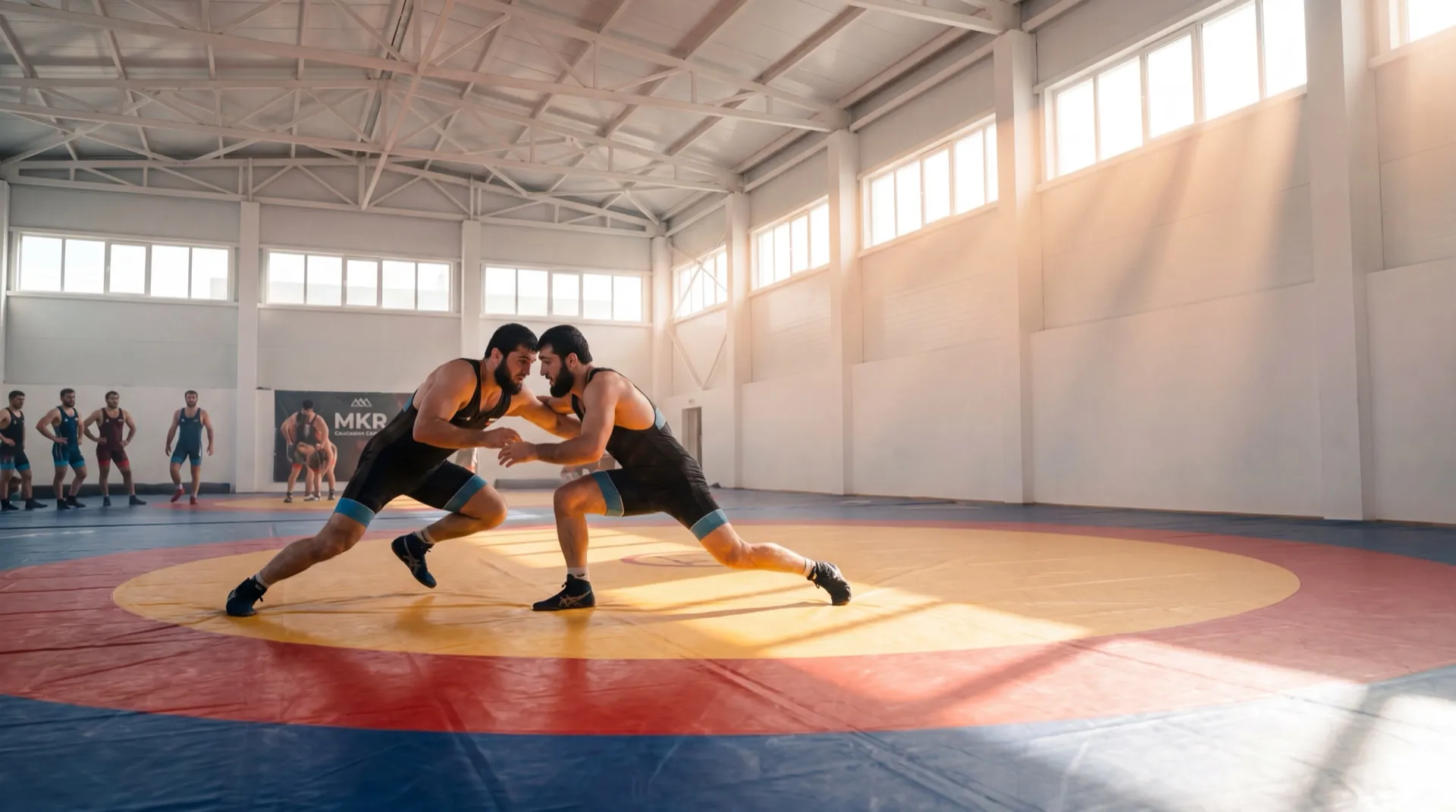
During your MKR camp, you train with the local coaches directly, in the same gyms as those that produce the champions. The 4 official 2026/2027 sessions offer 15 places for Wrestling in Dagestan and 15 places for MMA in Chechnya each. You can also choose a Custom format to adapt duration and dates, or a Family format to come with your child from age 8.
To discuss your application before registration, contact Ruslan via WhatsApp +33 7 83 10 96 81 or book directly on the registration page. The next step is the free kickoff call, no commitment.